••
CONIWAS and GAPHTO Warn of Public Health Emergency Following Nationwide Floods
•3 min read•10 sources
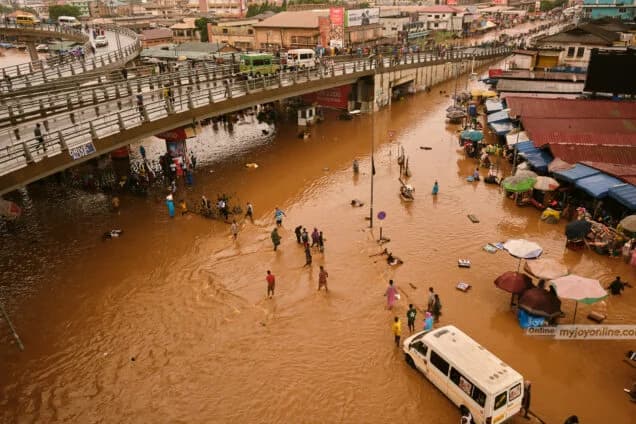
Ghana is currently facing a significant public health emergency in the aftermath of devastating floods that have hit Accra and other parts of the country. The Ghana Association of Public Health Technical Officers (GAPHTO) and various health advocates have sounded the alarm over heightened risks of cholera, typhoid fever, and malaria outbreaks. Contaminated water sources, stagnant pools that serve as mosquito breeding grounds, and overcrowded living conditions for displaced families have created a precarious environment. Experts warn that the convergence of the peak rainy season with inadequate sanitation infrastructure could lead to a widespread health crisis if immediate preventive measures are not prioritized.
In response to the growing threat, the Coalition of Non-Governmental Organisations in Water and Sanitation (CONIWAS) has called on the government to empower Metropolitan, Municipal, and District Assemblies (MMDAs) to strictly enforce environmental sanitation by-laws. The coalition recommends a multi-pronged approach, including the disinfection of high-risk areas, the provision of safe drinking water, and intensified food hygiene inspections. While CONIWAS acknowledged the government's release of GHS 300 million for emergency relief operations, they emphasized that financial support alone is insufficient without sustained investment in Water, Sanitation, and Hygiene (WASH) infrastructure and the removal of illegal structures blocking waterways.
Beyond the capital, international agencies including UNICEF and the World Health Organization (WHO) have joined forces with the National Disaster Management Organisation (NADMO) to address the crisis in the Keta Municipality. This collaboration has focused on training NADMO personnel in advanced data collection to better assess the impact of flooding in severely affected communities such as Anyako and Aborlove-Nolopi. By gathering accurate field data, these organizations aim to better coordinate humanitarian assistance and ensure that interventions are targeted toward the most vulnerable populations suffering from the disaster's health and economic consequences.
The current crisis has reignited a national debate over urban planning and civic responsibility. While citizens often blame the government for failing to provide resilient drainage systems, authorities point to illegal waste disposal and construction in flood-prone areas as primary catalysts for the disasters. Public health experts argue that effective disaster management must shift from reactive relief to proactive prevention. This includes building climate-resilient infrastructure, enhancing community disease surveillance, and fostering a culture of environmental stewardship. As climate change continues to increase the frequency of extreme weather events, long-term strategic planning and responsible leadership at all levels remain the only viable path to ensuring the health and safety of Ghanaian communities.
This story touches markets covered on Anansi Intelligence ↗.
More from health
Continue exploring similar stories


