••
Nsawam Inmate Fuseini Alidu Konlabik Defies Odds with First-Class Degree from University of Cape Coast
•2 min read•1 source
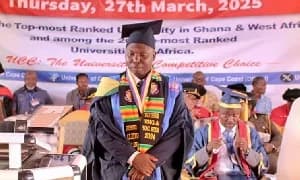
In a remarkable display of resilience and academic excellence, Fuseini Alidu Konlabik, a 40-year-old inmate at the Nsawam Medium Security Prison, has graduated with a first-class degree from the University of Cape Coast (UCC). Despite having spent the last 12 years behind bars, Konlabik successfully earned a Bachelor of Education in Junior High Education, proving that incarceration does not necessarily mark the end of one's intellectual or professional aspirations. His achievement has been hailed as a historic milestone for prison education and rehabilitation programs in Ghana.
Konlabik’s journey to academic success began within the prison walls, where he first navigated the challenges of secondary education. After successfully completing Senior High School while serving his sentence, he enrolled in a distance education program facilitated by UCC. This program, specifically tailored to provide higher education opportunities to inmates, allowed him to balance the rigors of prison life with intensive academic study. His dedication culminated in his recent graduation, where he emerged as one of the top performers in his cohort, setting a new standard for educational attainment within the correctional system.
The success of inmates like Konlabik highlights the critical role of distance learning and institutional partnerships in the Ghanaian correctional system. By offering degree programs through institutions like the University of Cape Coast, the Ghana Prisons Service aims to equip inmates with the skills and qualifications necessary for successful reintegration into society upon their release. Such initiatives are seen as vital components of a modern penal system that prioritizes reformation and human development alongside justice and security, reducing the likelihood of recidivism.
As Konlabik looks toward the future, his story serves as a powerful testament to the transformative power of education and the resilience of the human spirit. For many observers, this achievement underscores the need for continued investment in prison reform and the expansion of educational resources across all correctional facilities in the country. By turning a decade of confinement into a period of self-improvement, Konlabik has set an inspiring example for his fellow inmates and demonstrated that the pursuit of knowledge remains a viable path to personal redemption and professional readiness.
Related topic
Ghana Prisons Service Recruitment: Latest News →