••
FDA Seizes 4,504 Hazardous Cosmetics as Ghana Health Service Reassures Public on Malaria Net Safety
•3 min read•3 sources
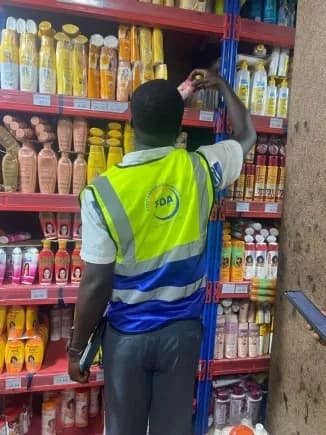
In a concerted effort to safeguard public health, Ghanaian regulatory bodies have intensified enforcement actions and public awareness campaigns. The Food and Drugs Authority (FDA) recently conducted a nationwide sweep, resulting in the seizure of over 4,500 hazardous cosmetic products. Simultaneously, the Ghana Health Service (GHS) has moved to debunk social media misinformation regarding the safety of insecticide-treated nets (ITNs) distributed to school children, while veterinary and health experts are calling for more stringent enforcement of food safety regulations across the country.
The FDA’s week-long surveillance operation spanned 15 regions and led to the confiscation of 4,504 unregistered and potentially dangerous cosmetic items. Authorities noted that many of these products contained harmful substances such as hydroquinone and steroids, which are known to cause severe health complications. The FDA stressed that consumers should only purchase cosmetics from licensed outlets and must verify product registration to ensure they are not exposing themselves to chemical hazards that can have long-term physiological impacts.
Addressing concerns in the educational sector, the GHS issued a firm rebuttal to claims that Interceptor G2 insecticide-treated nets contain harmful chemicals. Distributed as part of a national malaria elimination strategy, the service clarified that these nets are fully approved by both the World Health Organization (WHO) and Ghana’s FDA. Health officials explained that while the nets use low-risk insecticidal compounds, they pose no respiratory risk to children. To ensure comfort, the public is advised to simply air the nets before first use to dissipate any mild odors, as the GHS remains committed to its malaria eradication goals.
Parallel to these enforcement actions, experts at the World Food Safety Day event in Accra highlighted critical gaps in the country’s food supply chain. Dr. Benjamin Kissi Sasu of the Veterinary Services Directorate (VSD) pointed to weak enforcement and poor market sanitation as major drivers of food-borne diseases. He urged farmers to use only approved veterinary medicines and emphasized the need for a "One Health approach"—a strategy advocated by Dr. Caryn Agyeman Prempeh to integrate human, animal, and environmental health protocols to combat rising diarrheal diseases and ensure public safety.
Collectively, these developments underscore a period of heightened vigilance for Ghana’s health infrastructure. Officials from various agencies, including the UK Animal and Plant Health Agency, have called for sustained stakeholder collaboration to address these multifaceted safety challenges. By combining regulatory crackdowns with proactive public education, authorities aim to build a more resilient health environment where consumers are protected from both physical hazards and the dangers of unverified social media information.
This story touches markets covered on Anansi Intelligence ↗.
More from health
Continue exploring similar stories


