••
Minister Eric Opoku Highlights Economic Gains in Agriculture as Parliament Calls for Probe into Poultry Program Misuse
•3 min read•12 sources
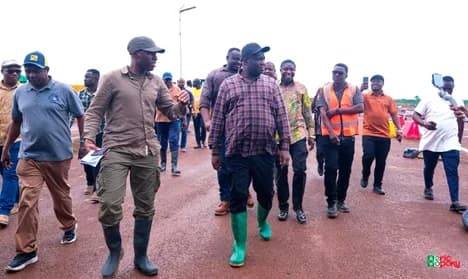
Minister for Food and Agriculture, Eric Opoku, has announced a significant economic milestone, reporting that food inflation in Ghana has dropped below four percent. This decline, described as a historic achievement not seen in decades, is attributed to intentional government investments and policy implementations aimed at reducing the cost of living. To further support the agricultural sector against global price hikes driven by geopolitical tensions, the government has distributed nearly 500,000 bags of free fertilizer to peasant farmers, who constitute the majority of the nation's farming population. This initiative aims to stabilize domestic food prices and enhance food security for households across the country.
Infrastructure and corporate partnerships are also at the forefront of the Ministry's current agenda. The Ministry of Food and Agriculture (MoFA) recently secured a GH¢1.068 million sponsorship from 3TREES Ghana Painting Ltd for the renovation of its national headquarters under the Brighten Ghana Initiative. Meanwhile, Minister Opoku recently inspected the Ekyeamamfrom and Konadu irrigation projects in the Kwahu Afram Plains, which are 85% and 96% complete, respectively. These projects are critical to reducing Ghana's $3 billion food import bill, although they face significant hurdles, including funding gaps and disruptions caused by Fulani herdsmen. The Minister has also promised an upcoming national address specifically targeting challenges within the tomato industry.
Despite these advancements, the agricultural sector faces intense scrutiny over the management of public resources. Minority Leader Alexander Afenyo-Markin has officially called on the Economic and Organised Crime Office (EOCO) to investigate the 'Nkoko Nkitinkiti' poultry programme. The call for a probe follows admissions that some beneficiaries consumed the birds provided for rearing instead of using them to boost local poultry production. Afenyo-Markin emphasized that such misuse of state funds demands strict accountability. This controversy coincides with a new study, 'Youth in Just Food Systems Transitions,' which advocates for a bipartisan, long-term food systems policy to insulate agricultural development from political interference and better support the 40% of Ghanaian youth engaged in the sector.
In a related effort to mitigate the environmental impact of illegal mining on agricultural and water resources, the Ghana Gold Board (GOLDBOD) has committed GHS 8.4 million to rehabilitate water treatment systems in the Western and Central Regions. CEO Sammy Gyamfi clarified that while the current administration inherited these environmental challenges, they are committed to restoring water quality affected by severe siltation. These various initiatives—from infrastructure development and corporate partnerships to environmental restoration—underscore a complex national effort to modernize Ghana’s food systems while navigating the challenges of accountability and sustainable resource management.
This story touches markets covered on Anansi Intelligence ↗.
Live rates
Ghana gold price →More from politics
Continue exploring similar stories


