••
Fisheries Minister Emelia Arthur Advocates for Science-Driven Blue Economy Amidst Naval Crackdown on Illegal Fishing
•2 min read•4 sources
Ghana's Ministry of Fisheries and Aquaculture Development, led by Minister Emelia Arthur, has launched a strategic push for science-based interventions to safeguard the nation's "Blue Economy." Speaking at the Ghana Science Association's (GSA) 20th biennial workshop, the Minister highlighted the urgent need to protect marine ecosystems from the dual threats of illegal mining (galamsey) and destructive fishing practices. This policy initiative coincides with intensified enforcement efforts by the Ghana Navy, which is currently ramping up operations to curb Illegal, Unreported, and Unregulated (IUU) fishing across the country's territorial waters.
Central to the Ministry's strategy is the proposed establishment of a joint technical body with the GSA to facilitate structured engagement on critical maritime issues. Minister Arthur emphasized that scientific research must move beyond academic discourse and be translated into actionable policies. This partnership aims to enhance data collection for stock assessment, coastal resilience, and climate adaptation. To provide a legislative backbone for these efforts, a draft Blue Economy Commission Bill is currently in development, with a target for approval by October 2026. The Minister urged scientists to utilize digital solutions and innovative technologies to monitor and manage Ghana's maritime resources effectively.
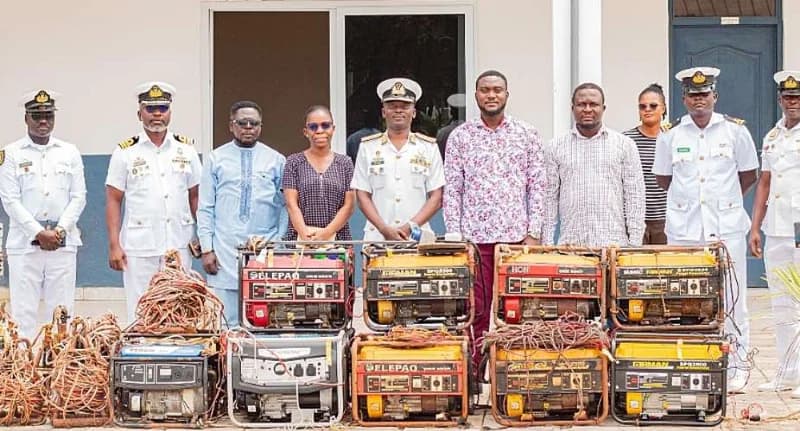
While the Ministry focuses on policy and research, the Ghana Navy is active on the front lines of marine conservation. Commodore Stephen Billins Nyam recently met with Fisheries Commission officials to hand over intercepted illegal fishing gear seized during a naval operation near Winneba and Apam. This collaboration signifies a strengthening of ties between the military and civilian fisheries regulators. Commodore Nyam reaffirmed the Navy's commitment to protecting Ghana's sovereign waters and urged all stakeholders to comply with existing fisheries regulations to ensure the long-term sustainability of the sector, warning that illegal gear continues to threaten the replenishment of fish stocks.
The government's broader vision for the Blue Economy involves the inclusion of vulnerable groups and coastal communities who depend on the ocean for their daily livelihoods. Minister Arthur stressed that community-centered approaches are essential for the success of environmental protection measures, ensuring that those most affected by declining fish stocks are part of the solution. By integrating technological advancements with grassroots involvement and robust naval enforcement, the Ministry aims to improve national food security. As the 2026 legislative deadline approaches, the government intends to foster a multi-sectoral environment where research, enforcement, and community action work in tandem to preserve Ghana’s aquatic wealth.