••
Driver and Vehicle Licensing Authority Introduces Biometric DVLAverify App for iOS and Web Registration
•2 min read•1 source
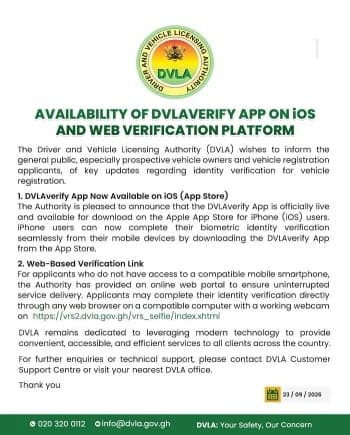
The Driver and Vehicle Licensing Authority (DVLA) has officially introduced the DVLAverify application for iOS devices and a corresponding web-based platform to streamline the vehicle registration process in Ghana. This development marks a significant step in the authority’s digital transformation agenda, providing a more convenient method for prospective vehicle owners to verify their identity. By integrating remote biometric identity verification, the new system aims to enhance service accessibility and reduce the need for physical visits to DVLA offices, thereby improving overall operational efficiency.
The DVLAverify app is currently available for download on the Apple App Store, catering to iPhone users who need to complete biometric authentication as part of the vehicle registration cycle. For users without compatible iOS smartphones, the authority has launched a dedicated web portal that offers the same verification services. This multi-platform approach ensures that all citizens, regardless of their device preference, can benefit from the digitized verification process, making the system more inclusive and user-friendly.
In addition to facilitating remote verification, the DVLA has incorporated various support options within both the mobile app and the web portal to assist applicants throughout the process. This initiative is expected to significantly reduce the administrative burden on both the authority and the public by eliminating long queues and minimizing manual documentation errors. The biometric feature also adds an essential layer of security, ensuring that vehicle registrations are tied to verified identities, which helps in curbing fraudulent activities within the transport sector.
As the DVLA continues to modernize its operations, the rollout of DVLAverify represents a broader commitment to utilizing technology for better public service delivery. The authority has indicated that these digital tools will undergo continuous refinement to meet the evolving needs of motorists and vehicle owners across the country. This shift toward digital-first solutions aligns with national efforts to digitize administrative processes, setting a precedent for other government agencies to adopt similar technological innovations for enhanced transparency and convenience.
