••
DR Congo Ebola Outbreak Scales to 1,500 Cases as Healthcare Workers Strike Over Unpaid Wages
•2 min read•8 sources
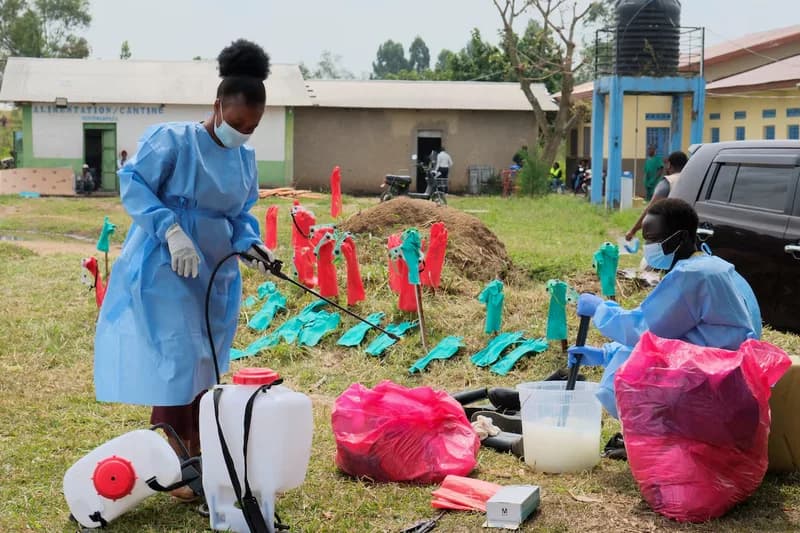
The Democratic Republic of Congo (DRC) is currently battling the most severe outbreak of the rare Bundibugyo species of Ebola on record, with the World Health Organization (WHO) warning that the virus remains in an expansion phase. As of October 2023, the outbreak has resulted in 1,561 confirmed cases and 506 fatalities. WHO representative Anne Ancia noted that the spread is being exacerbated by high levels of population movement and a lack of capacity at existing treatment centers. The situation is further complicated because the Bundibugyo strain historically lacks a proven cure, making the current surge particularly dangerous for the region.
Adding to the health crisis, frontline healthcare workers in the hardest-hit province of Ituri have launched strikes in protest of months of delayed payments. Many of these professionals report they have not received wages or bonuses since the outbreak was officially declared on May 15. This labor dispute has severely jeopardized containment efforts, as responders face critical shortages of personal protective equipment and a rising number of infections within their own ranks. The WHO has highlighted that some infected health workers are not seeking local treatment, inadvertently spreading the virus to new regions as they travel to seek care elsewhere.
In response to the clinical challenges of the Bundibugyo strain, the PARTNERS trial has commenced in the DRC to evaluate potential treatments. This collaborative research effort involves the Institut National de Recherche Biomédicale, the Institute of Tropical Medicine, and Oxford’s Pandemic Sciences Institute, with support from the WHO. The trial is testing the effectiveness of the antiviral remdesivir and the monoclonal antibody MBP134, both alone and in combination. Researchers emphasize that the success of these trials depends heavily on community engagement and building trust, which are essential for ensuring patient participation and acceptance of new medical interventions.
As the outbreak continues to expand, health authorities are working to establish more checkpoints to monitor population movement and mitigate further transmission. However, the success of these measures depends on resolving the grievances of the medical workforce and ensuring that treatment facilities are properly equipped and staffed. The dual challenge of managing a labor strike while conducting urgent clinical research underscores the precarious nature of the current response. International health officials remain focused on balancing the immediate humanitarian need for containment with the long-term goal of identifying effective therapies to prevent future fatalities from this rare Ebola species.
This story touches markets covered on Anansi Intelligence ↗.
More from health
Continue exploring similar stories


