••
Doctors Without Borders Warns of 'Dangerous Gaps' as DRC Ebola Cases Surge to 782 Across Three Provinces
•2 min read•4 sources
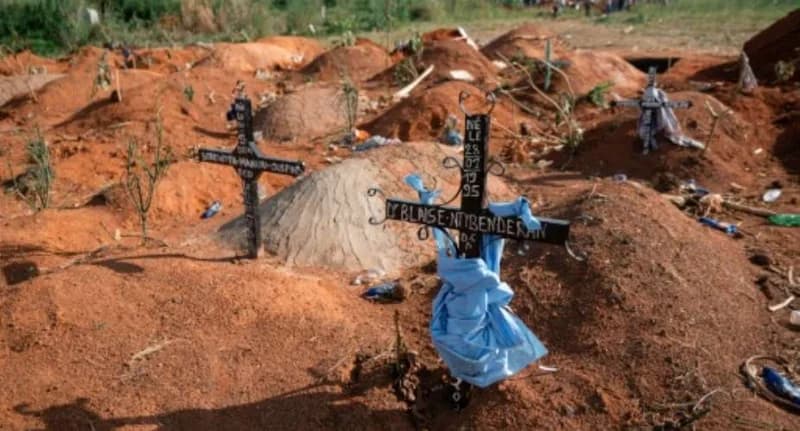
The Democratic Republic of Congo (DRC) is facing a critical escalation in its 17th Ebola outbreak, with confirmed cases reaching 782 and the death toll climbing to at least 181. Since the outbreak was officially declared on May 15, the virus has rapidly spread across the provinces of Ituri, North Kivu, and South Kivu. Health authorities recently reported a record single-day increase of 72 new cases, signaling that the epidemic is expanding faster than current containment efforts. The situation has become particularly dire as the virus enters new health zones, including Nia-Nia and Mabalako, bringing the total number of affected areas to 20 out of 36 health zones in Ituri and 10 in North Kivu.
Medical humanitarian organization Doctors Without Borders (MSF) has issued a stern warning regarding "dangerous gaps" in the international and local response. MSF experts suggest that the official figures may significantly underrepresent the true scale of the crisis due to overlooked transmission chains and inadequate surveillance. A primary obstacle is the lack of diagnostic infrastructure; currently, only one laboratory is operational for testing in the entire North Kivu region. This limitation, coupled with persistent insecurity in the northeastern provinces, has severely hampered the ability of medical teams to detect and respond to new infections before they spread further into the community.
The response is further complicated by the specific characteristics of this outbreak, which is driven by the Bundibugyo strain of the Ebola virus. Health officials are struggling with a massive funding deficit of approximately $21.5 million, which is essential for scaling up operations. Beyond financial constraints, field teams are encountering significant social challenges, including community reluctance toward post-mortem procedures and difficulties in effective contact tracing. Currently, 359 patients remain hospitalized, while only 40 recoveries have been officially documented, highlighting the high mortality rate and the strain on existing medical facilities.
International health experts and NGOs warn that without an immediate and massive scale-up of resources, the current situation in the DRC could rival the catastrophic 2014 West Africa epidemic. The combination of geographical spread into 31 total health zones, a high volume of suspected cases, and limited laboratory capacity creates a volatile environment for further transmission. The priority for the coming weeks remains closing the funding gap, improving community engagement, and expanding laboratory access to ensure that the response can finally outpace the epidemic's growth.
This story touches markets covered on Anansi Intelligence ↗.
More from health
Continue exploring similar stories


