••
Democratic Republic of Congo Faces 25% Surge in Ebola Cases as Health Infrastructure Strains Under Bundibugyo Variant
•2 min read•5 sources
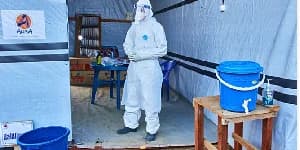
The Democratic Republic of Congo (DRC) is grappling with a rapidly escalating Ebola outbreak, with the Africa Centers for Disease Control and Prevention (Africa CDC) reporting a staggering 25% increase in confirmed cases within a single week. Since the outbreak was officially declared in mid-May, the total number of cases has reached 1,759, resulting in at least 600 fatalities. Health officials have characterized this current wave as the fastest-growing outbreak in the region's history, placing an immense burden on the country's medical infrastructure and prompting urgent calls for increased international support and resources.
The surge is primarily driven by the Bundibugyo variant of the virus, which presents unique containment challenges as there is currently no specific vaccine or treatment approved for this particular strain. This has led to a critical shortage of medical facilities; currently, 95% of available treatment beds are occupied, necessitating an immediate 50% increase in hospital capacity to manage the influx of patients. Despite these hurdles, there has been progress in diagnostic capabilities, with testing capacity now reaching 2,000 tests per day in Congo, and two new antiviral therapies are currently undergoing clinical evaluation to provide potential future relief.
Beyond the borders of the DRC, regional neighbors are taking proactive measures to prevent a wider epidemic. Uganda has reported a minimal outbreak of 20 cases, with only one patient currently remaining under treatment, demonstrating effective initial containment. Meanwhile, in Kenya, Doctors Without Borders (MSF) has established a specialized Ebola training facility. This center is designed to equip health workers with the necessary skills to handle the complexities of Ebola emergencies, ensuring that frontline responders are adequately prepared before being deployed to the most affected areas in the DRC.
Despite these efforts, health authorities warn that significant obstacles remain, particularly regarding the logistics of specimen transport and the speed of reporting new cases to central health agencies. Timely notification is essential for effective contact tracing and ring vaccination strategies. As the international community monitors the situation, the focus remains on scaling up hospital infrastructure and accelerating clinical trials for antiviral treatments. The current crisis underscores the ongoing vulnerability of the region to viral hemorrhagic fevers and the necessity for a robust, coordinated pan-African health response.
This story touches markets covered on Anansi Intelligence ↗.
More from health
Continue exploring similar stories


