••
Professor Denis Worlanyo Aheto Invested as UCC’s 12th Vice-Chancellor; Pledges Digital Transformation
•3 min read•9 sources
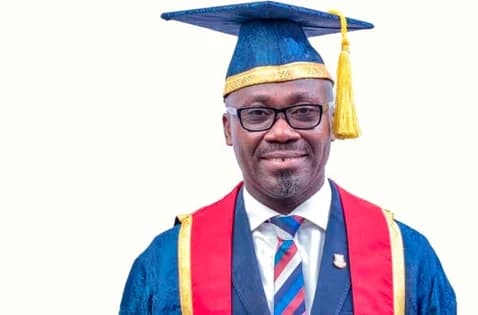
Professor Denis Worlanyo Aheto was formally invested as the 12th Vice-Chancellor of the University of Cape Coast (UCC) on August 1, 2025, marking the beginning of a transformative era for the institution. In his inaugural address, Professor Aheto unveiled an ambitious agenda aimed at positioning UCC as a global hub for digital learning and research excellence. The ceremony, attended by a wide array of dignitaries and academic stakeholders, highlighted the university's commitment to adapting to the evolving demands of higher education while maintaining its reputation for academic rigour and community engagement. Professor Aheto, an environmental scientist who previously served as Pro Vice-Chancellor and Acting Vice-Chancellor, emphasized that his appointment is a "solemn call to service" driven by humility and integrity.
A cornerstone of the new Vice-Chancellor’s vision is the launch of the UCC E-Campus, a fully digital platform designed to significantly expand access to higher education. This initiative aims to accommodate approximately 10,000 additional students annually by the 2026–2027 academic year, offering greater flexibility for learners across the globe. To support this expansion, Professor Aheto announced that the Ghana Tertiary Education Commission (GTEC) has already accredited 36 new postgraduate programs. This digital transition is intended to complement existing academic structures while ensuring the university remains competitive in an increasingly technology-driven educational landscape.
Beyond digital expansion, the Vice-Chancellor is prioritizing specialized research through the establishment of two major institutions: the Africa Ocean Institute and the Africa Centre for Food Integrity. These centers will focus on ocean governance, marine research, and food safety, leveraging Professor Aheto’s extensive background in environmental and fisheries science. By fostering innovation in these critical sectors, UCC aims to address pressing regional challenges and enhance its international relevance. The Vice-Chancellor pledged to strengthen industry partnerships and secure increased research funding to produce graduates equipped to lead national development efforts.
Professor Aheto also outlined a strategic roadmap for 2026 to 2030, titled "Empowering Excellence," which seeks to adopt a business-oriented approach to university management while preserving academic traditions. His administration’s five strategic priorities include sustainable financing, strengthened institutional governance, staff development, research excellence, and the enhancement of academic programs. He further committed to reviewing the current Corporate Strategic Plan to align it with his vision, which extends through 2032. As UCC enters this new chapter, the Vice-Chancellor’s focus on transparency, accountability, and measurable outcomes is expected to solidify the university’s status as a leader in higher education within Africa and beyond.
This story touches markets covered on Anansi Intelligence ↗.
More from education
Continue exploring similar stories


