••
Aliko Dangote Announces $16 Billion Kenya Refinery as AfCFTA Faces Critical Awareness Challenges and South African Labor Unrest
•3 min read•3 sources
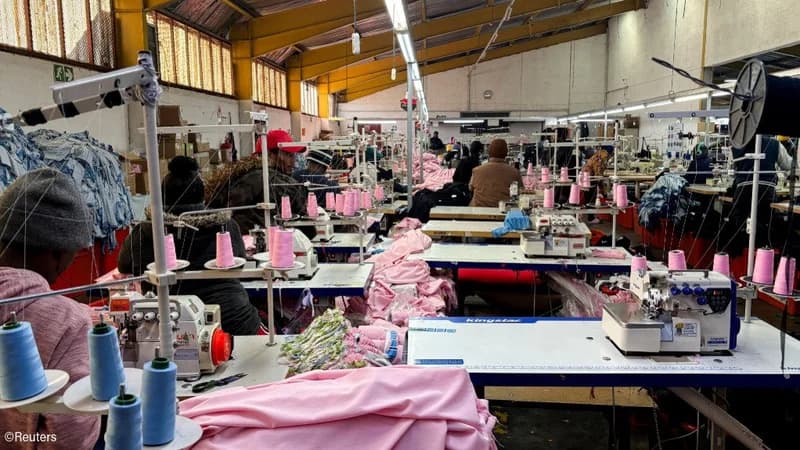
Africa is navigating a complex period of economic transformation, marked by ambitious industrial projects and regional trade agreements that face significant implementation hurdles. While billionaire Aliko Dangote has announced a massive $16 billion investment in Kenya to bolster energy self-sufficiency, a recent Afrobarometer study reveals that the African Continental Free Trade Area (AfCFTA) is struggling to gain public traction. Simultaneously, South Africa's manufacturing sector provides a cautionary tale of how social instability and xenophobia can undermine economic growth, as clothing factories in Newcastle grapple with severe labor shortages following the exodus of migrant workers.
The Afrobarometer report, launched in Accra, sounds an alarm for the future of intra-African trade. Despite the AfCFTA’s potential to link 1.4 billion people and stimulate unprecedented economic growth, only 13% of citizens across 38 African countries are aware of the agreement. Experts emphasize that while there is strong theoretical support for the policy, the "awareness gap"—particularly among non-elite groups—threatens to stall its success. Researchers urged for improved communication and infrastructure to bridge the divide between policymakers and citizens, stressing that the ease of movement and cross-border trade benefits must be felt on the ground to be successful.
On the industrial front, Aliko Dangote is moving to bridge Africa's energy infrastructure deficit with a 700,000-barrel-per-day oil refinery in Kenya. Scheduled to begin construction by October 2026, the project is valued at $16 billion and is positioned as a cornerstone for East African energy independence. Preparations are reportedly at an advanced stage, and the facility is expected to serve a vast corridor reaching as far as Egypt. This development mirrors a broader continental push for self-reliance, yet its long-term viability remains tied to the very regional trade frameworks that currently suffer from low public visibility.
However, these grand visions of a unified African market face immediate localized challenges, as seen in South Africa’s textile industry. In Newcastle, clothing factories are on the brink of closure after anti-immigrant protests led by the group "March and March" drove out skilled migrant laborers. Despite a national unemployment rate exceeding 33%, factory owners are struggling to recruit local workers for low-paying positions characterized by difficult conditions. This labor crisis highlights a disconnect between nationalist political movements and the practical requirements of the manufacturing sector, suggesting that without social stability, industrial expansion remains fragile.
Together, these developments illustrate a continent at a crossroads where high-level economic policy must meet grassroots reality. The path to a prosperous, integrated Africa requires more than just high-value investments and legislative frameworks; it necessitates a concerted effort to educate the populace and foster social cohesion. As Kenya prepares for the Dangote refinery and AfCFTA officials work to improve communication, the situation in South Africa serves as a reminder that local labor dynamics and public sentiment remain the ultimate arbiters of whether Africa’s economic potential will be fully realized.
This story touches markets covered on Anansi Intelligence ↗.
More from africa
Continue exploring similar stories


