••

Educational institutions across Ghana have received a significant boost through a series of multi-sectoral initiatives aimed at fostering legal literacy, environmental innovation, and engineering excellence. From the inauguration of Justice Clubs in the Eastern Region to high-stakes STEM competitions and international engineering outreach, these programmes reflect a concerted effort to equip the next generation with the diverse skill sets required for national development. These developments highlight a growing trend of integrating practical leadership training and technical expertise into the traditional school curriculum.
In a landmark move to promote the rule of law, Justice Paul Baffoe-Bonnie inaugurated five-member executive teams for newly established Justice Clubs across ten senior high schools in the Eastern Region. Speaking on behalf of the Judicial Service, he emphasized that these clubs are designed to instill values of integrity, accountability, and discipline among students. The initiative, supported by Judicial Secretary Musah Ahmed and Justice Professor Olivia Anku Tsede, seeks to create a pipeline of legally aware citizens and advocates for justice. By engaging youth in the mechanics of the legal system, the program aims to demystify the judiciary and encourage students to aspire to leadership roles regardless of their socio-economic backgrounds.
Simultaneously, the focus on technical education reached a peak as St Augustine’s College emerged victorious in this year’s STEM Plastic Waste Management Challenge for the Southern Belt. Competing against fellow Catholic senior high schools, St Augustine’s secured 77% of the vote with innovative technological solutions for plastic waste. The event, organized by the Konrad-Adenauer-Stiftung (KAS) and the Catholic Education Unit, marked a significant shift from traditional craft-based projects to sophisticated technology-oriented entries. KAS Country Director Anna Lena Sabroso-Wasserfall noted that the competition serves as a critical platform for addressing Ghana's plastic waste crisis while aligning with environmental stewardship goals.
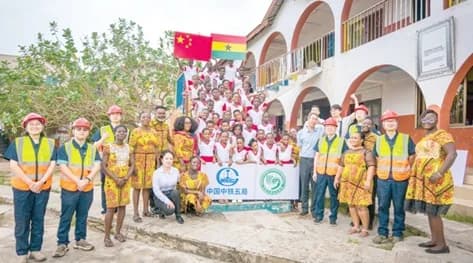
Further strengthening the ties between industry and education, China Railway No. 5 Engineering Ghana Limited (CR5) partnered with the Confucius Institute at the University of Ghana for an outreach program at Zenaddo International School in Accra. This initiative sought to inspire future engineers through hands-on bridge-building activities and exposure to engineering-related Chinese language lessons. Beyond the classroom experience, CR5 donated essential resources including a smart TV and STEM materials, while the Confucius Institute provided Chinese literature. School headmistress Zenobia Annum-Addo and Institute Director Liu Baijun underscored the importance of such international collaborations in broadening students' horizons and preparing them for the global engineering landscape.
These diverse initiatives collectively underscore a shift toward a more holistic educational model in Ghana, where academic learning is bolstered by civic responsibility, environmental consciousness, and global industrial insights. By bridging the gap between professional sectors and the classroom, these programs ensure that Ghanaian students are not only academically proficient but also socially responsible and technically innovative. The continued success of these interventions suggests a promising future for the country’s youth as they transition from students to national problem-solvers.
This story touches markets covered on Anansi Intelligence ↗.
Continue exploring similar stories


