••

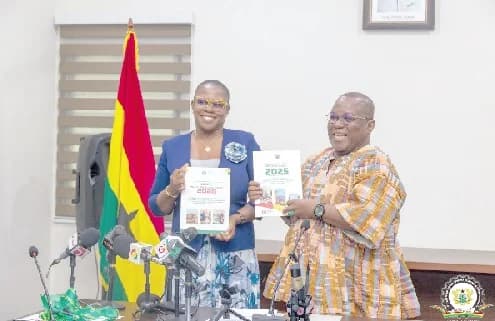
The Monetary Policy Committee (MPC) of the Bank of Ghana has unanimously decided to maintain the Monetary Policy Rate (MPR) at 14% following its 131st meeting in July 2026. Governor Dr. Johnson Pandit Asiama cited the need to manage inflationary risks stemming from geopolitical tensions in the Middle East, which have driven up crude oil prices and threatened local price stability. Despite these external pressures, the domestic economy has shown resilience, with Real GDP expanding by 6.4% in the first quarter of 2026, up from 6.2% in the same period last year. The Bank’s Composite Index of Economic Activity (CIEA) further underscored this momentum, recording a significant 13.4% annual growth in May 2026, driven by robust industrial production, tourist arrivals, and increased credit to the private sector.
While growth indicators remain positive, Ghana’s fiscal and external positions face mounting challenges. Standard Bank recently revised the country’s 2026 current account surplus projection downward by US$1 billion to US$4 billion, citing the high cost of oil imports which now account for nearly 29% of total goods imports. Additionally, the Bank of Ghana reported a US$1.2 billion decline in Gross International Reserves between March and June 2026, reducing import cover to five months. This drop occurred despite a surge in total exports to US$18.29 billion, fueled by gold exports that more than doubled. The central bank noted that demand pressures for foreign exchange continue to outstrip supply, contributing to a 9.5% depreciation of the cedi against the US dollar in the interbank market over the first seven months of the year.
Concerns regarding the sustainability of recent economic gains have been raised by both the National Development Planning Commission (NDPC) and the Institute of Economic Research and Public Policy (IERPP). The country’s total public debt stock rose to GH¢720.8 billion by May 2026, representing 45.1% of GDP. IERPP Executive Director Prof. Isaac Boadi cautioned that the perceived improvement in debt-to-GDP ratios may be more reflective of GDP rebasing than organic fiscal expansion, noting that high recurrent spending on debt servicing continues to limit infrastructure investment. Simultaneously, the NDPC warned that Ghana’s heavy reliance on gold, oil, and cocoa exports leaves the economy vulnerable to global price volatility, urging a more aggressive shift toward industrial diversification.
In response to these structural weaknesses, the government is emphasizing productivity-led initiatives like the 24-Hour Economy strategy. Presidential Adviser Goosie Tanoh clarified that the initiative is designed to maximize industrial capacity and transition Ghana from a raw material exporter to a high-value producer of manufactured goods. This long-term focus on value addition is seen as critical to stabilizing the currency and creating better-paying jobs for the youth. As the Bank of Ghana prepares for its next policy meeting in late September, the focus remains on balancing these industrial ambitions with the need for a calibrated monetary stance to keep inflation within its target range amidst a volatile global energy market.
This story touches markets covered on Anansi Intelligence ↗.
Live rates
Bank of Ghana policy rate →Continue exploring similar stories


