••
Speaker Bagbin Enforces MP Conduct Rules as Controversial Public Tribunal Bill Sparks National Debate
•3 min read•24 sources
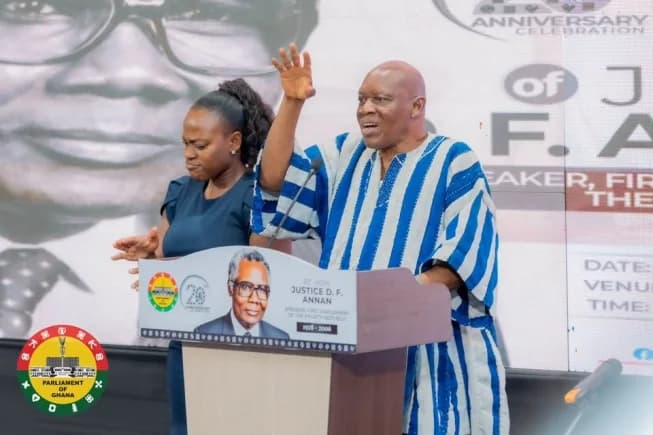
Ghana's political landscape is currently dominated by a dual focus on institutional reform and the enforcement of personal accountability among public officials. Speaker of Parliament Alban Sumana Kingsford Bagbin has issued a stern directive to Members of Parliament (MPs) regarding the unauthorized use of sirens and police escorts, following a Cabinet decision aimed at curbing road indiscipline and restoring public trust. This move coincides with the contentious passage of the Public Tribunal Bill, 2026, which has been met with a boycott by the Minority and vehement opposition from organized labor and the New Patriotic Party (NPP) flagbearer, Dr. Mahamudu Bawumia. Critics argue the bill risks creating a parallel, politicized judicial system that ignores past constitutional recommendations for the abolition of regional tribunals.
The debate over the Public Tribunal Bill has intensified as the Trades Union Congress (TUC) and Dr. Bawumia urge President Mahama to withhold his assent. The TUC's Secretary-General, Joshua Ansah, expressed fears that the new framework could lead to unfair trials reminiscent of historical abuses, while Dr. Bawumia highlighted that the legislation contradicts findings from the H. Kwasi Prempeh Constitutional Review Committee. Conversely, proponents like Minister Emmanuel Armah-Kofi Buah argue the tribunals are essential for addressing the mounting backlog of cases in traditional courts and expanding access to justice. This legal friction is mirrored in Parliament’s internal challenges, where experts like Dr. Rasheed Draman are urging caution regarding the seat of Asante Akyem North MP Ohene Kwame Frimpong following his recent arrest in Amsterdam, emphasizing the importance of judicial process over premature seat vacancy declarations.
At the local government level, the Auditor-General's latest reports have exposed significant financial inefficiencies within Metropolitan, Municipal, and District Assemblies (MMDAs). Between 2021 and 2025, several assemblies reportedly spent over GH"22.4 million on salaries for revenue collectors who generated only GH"10.26 million in property rates and fees. This fiscal gap has prompted calls from the Chamber for Local Governance and the District Assemblies Common Fund (DACF) for stricter enforcement of existing financial regulations rather than the creation of new laws. Simultaneously, Gifty Nyarko, President of the Local Government Service Association of Physical Planners, is advocating for the prosecution of illegal land sellers under the Land Use and Spatial Planning Act to prevent environmental degradation and flooding, while the Accra Metropolitan Assembly has launched the "See Something, Say Something" platform to empower citizens to report sanitation violations via WhatsApp.
Underpinning these developments is a broader call for a "moral reset" in Ghanaian public life. During the third National Development Conference, leaders including Speaker Bagbin and retired Supreme Court Justice William Atuguba emphasized that national progress is being stymied by a culture where party loyalty frequently supersedes national interest. Former Chief of Staff Akosua Frema Osei-Opare reinforced this sentiment, asserting that Ghana's struggle with corruption is a failure of enforcement rather than a lack of legislation. As the Bank of Ghana’s Monetary Policy Committee prepares to meet to address inflation and oil price volatility, the consensus among civic and traditional leaders remains that sustainable development and democratic integrity will only be achieved through a combination of strict legal compliance, ethical leadership, and responsible citizenship.
This story touches markets covered on Anansi Intelligence ↗.
Related topic
NPP (New Patriotic Party): Latest News →Live rates
Bank of Ghana policy rate →More from politics
Continue exploring similar stories


