••
Chief Justice Baffoe-Bonnie Urges Judicial Balance as High Court Halts NAFCO Trial and MFWA Launches Journalists’ Legal Fund
•3 min read•7 sources
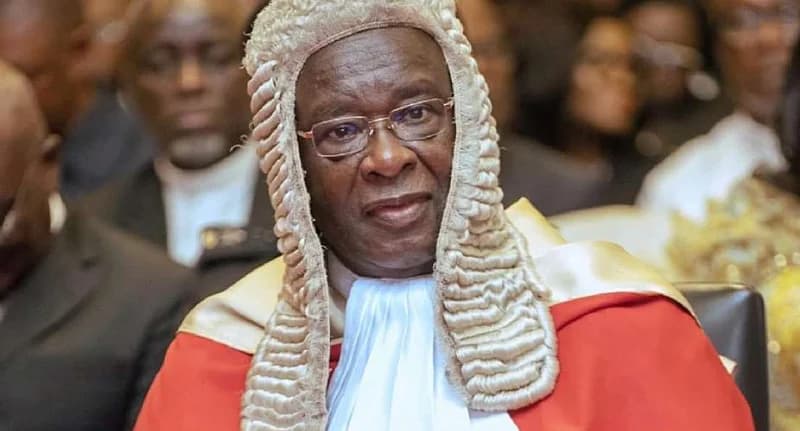
Chief Justice Paul Baffoe-Bonnie has called for a more humane and balanced judiciary as the Ghanaian legal system navigates high-profile corruption trials and increasing pressure on the media. Speaking at the 45th annual conference of the Association of Magistrates and Judges of Ghana (AMJG), the Chief Justice emphasized that judicial officers must not allow their heavy professional responsibilities to consume their personal and family lives. He noted that maintaining humanity and self-care is a strength, not a weakness, and is essential for effective public service. To alleviate the burden on the current bench, he announced that the judiciary is awaiting clearance to recruit 127 newly interviewed magistrates to fill critical vacancies across the country.
Amidst these calls for reform, an Accra High Court has deferred the trial of Hanan Abdul-Wahab Aludiba, the former Chief Executive of the National Food Buffer Stock Company (NAFCO), and his wife, Faiza Seidu Wuni. Justice Francis Achibonga ruled that the trial, which involves charges of stealing, money laundering, and causing financial loss to the state totaling GH¢62.6 million, cannot proceed until a decision is made regarding the return of mobile phones seized during investigations. The defense successfully argued that the devices contain vital information necessary for their preparation, leading the court to schedule the next hearing for October 7, 2026. While the prosecution had sought to begin witness testimonies immediately, the court prioritized the defendants' right to a fair trial.
In a parallel effort to safeguard democratic accountability, the Media Foundation for West Africa (MFWA) has launched a GH¢544,000 Legal Support Fund (LSF) to assist journalists facing legal harassment and litigation. This initiative, part of the African Media Integrity and Resilience Programme supported by the European Union and DW Akademie, provides a critical safety net for investigative reporters who often face criminal charges or injunctions intended to silence public interest stories. The fund also aims to enhance journalists' understanding of media law through intensive training, addressing a rise in legal actions that threaten journalistic integrity.
Complementing these institutional developments, members of the legal profession are being urged to uphold the highest ethical standards. Private legal practitioner Patrick Fafali Azameti recently cautioned young lawyers against prioritizing wealth and social status over integrity and diligence. He specifically warned against the politicization of constitutional interpretation, urging legal practitioners to adhere strictly to legal principles to protect the integrity of Ghana’s democracy. Together, these events reflect a significant period of introspection and structural adjustment within Ghana’s legal and civic landscape as the nation seeks to balance accountability with the protection of individual and professional rights.

