••

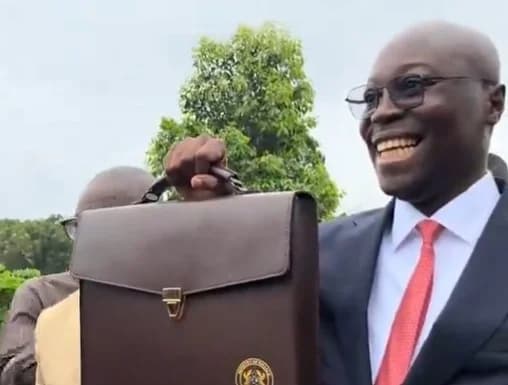
Ghana has achieved its statutory debt-to-GDP target of 45% years ahead of schedule, a landmark announcement made by Finance Minister Dr. Cassiel Ato Forson during the 2026 Mid-Year Fiscal Policy Review. Public debt has seen a sharp decline from 61.8% in 2024 to 44.7% in 2025, stabilizing at 45.0% by mid-2026. This fiscal discipline has led the World Bank and IMF to upgrade Ghana’s debt status to sustainable, improving the risk rating from high to moderate. Under the administration of President John Mahama, the economy grew by 6.4% in the first quarter of 2026, surpassing the full-year target and pushing the national economy beyond the US$100 billion milestone. Inflation also saw a significant drop to 5.3% in June 2026, while the cedi was recognized as a top-performing currency globally during the period.
Despite these macroeconomic gains, Dr. Forson warned of a significant domestic debt repayment burden totaling GH"111 billion due in 2027 and 2028, stemming from the previous Domestic Debt Exchange Programme (DDEP). To address this, the government is aggressively building a Sinking Fund, aiming to accumulate GH"30 billion by the end of 2026. This fund is currently supported by 7% of non-oil tax revenues and proceeds from domestic bond issuances, with GH"15.6 billion already secured. The Minister emphasized that while the DDEP postponed immediate crisis, proactive management is now essential to prevent a future default and maintain the trust of investors who recently participated in a GH"2.7 billion seven-year cedi bond issuance.
In a strategic shift in international relations, Ghana is transitioning from the IMF-supported Extended Credit Facility (ECF) to a 36-month non-financing Policy Coordination Instrument (PCI). This new framework focuses on six reform priorities, including fiscal consolidation, governance improvement, and economic diversification, intended to anchor stability without the need for direct loans. On the domestic front, the government has launched a digital VAT platform for non-resident service providers, expected to generate GH"2.3 billion in its first year. Dr. Forson noted that if these tax reforms successfully curb current revenue leakages, the government may be in a position to reduce overall tax rates by the end of 2027.
Complementing the fiscal measures, the Bank of Ghana’s Monetary Policy Committee recently maintained the policy rate at 14% to manage inflation expectations, though market analysts at Databank predict a possible cut to 12% or 13% by September 2026. While the government highlights that approximately 950,000 Ghanaians escaped multidimensional poverty between 2024 and 2025, some stakeholders remain critical. The Ghana Union of Traders' Associations (GUTA) expressed disappointment with the Mid-Year Review, citing a lack of relief regarding import duties and high business costs. Moving forward, Dr. Forson has invited the public to judge the government's performance based on the tangible creation of well-paying jobs and continued price stability as the 2027 debt horizon approaches.
This story touches markets covered on Anansi Intelligence ↗.
Related topic
John Mahama: Latest News & Updates →Live rates
Bank of Ghana policy rate →Continue exploring similar stories


