••
Finance Minister Ato Forson’s 2026 Mid-Year Budget Review Sparks Intense Parliamentary Debate Over Social Spending and Economic Growth
•3 min read•30 sources
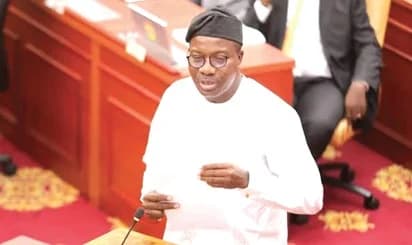
The Parliament of Ghana has commenced a spirited debate on the 2026 Mid-Year Fiscal Policy Review, presented by Finance Minister Dr. Cassiel Ato Forson. The session, which began in late July 2026, has highlighted a sharp divide between the Majority National Democratic Congress (NDC) and the Minority New Patriotic Party (NPP). While the government maintains that its fiscal strategy is driving economic recovery and prioritizing social welfare, the Minority argues that drastic spending cuts and revenue shortfalls are stifling growth and leaving critical infrastructure projects abandoned. Majority Leader Mahama Ayariga has scheduled the debate to culminate in final comments by leadership ahead of the House adjourning sine die on July 31.
The Majority caucus, led by figures such as Sagnarigu MP Atta Issah, defended the administration's performance by pointing to improved macroeconomic indicators, including a stable inflation rate of approximately 8% and a significant reduction in bank lending rates from 32% to 15.6%. Key highlights of the government's expenditure include the allocation of GH₵93 million for consolidated allowances for assembly members—a fulfillment of a campaign promise by President John Mahama—and substantial investments in health and education. These include GH₵4.5 billion for the National Health Insurance Authority (NHIA), GH₵1.1 billion for the Ghana Medical Trust Fund, and GH₵533 million to support first-year tertiary students, which the Majority argues demonstrates a commitment to protecting the vulnerable.
Conversely, the Minority Caucus has launched a scathing critique of the budget's execution. MP for Atiwa East, Abena Osei-Asare, and MP for Ofoase-Ayirebi, Kojo Oppong Nkrumah, accused the government of intentionally under-spending to create a misleading impression of fiscal discipline at the expense of job creation. They noted that capital expenditure has fallen significantly, delaying vital infrastructure and harming the business climate. Furthermore, Okaikwei Central MP Patrick Boamah questioned the government’s failure to fulfill its promise of creating 800,000 jobs and raised concerns regarding procurement breaches. Boamah alleged that major projects in the Finance Minister's constituency, including the Mankessim-Ajumako-Swedru Road, were awarded through sole-source and restricted tender processes contrary to stated procurement reforms.
External monitors and civil society have added a layer of scrutiny to the parliamentary proceedings. The Centre for Policy Scrutiny (CPS) flagged inconsistencies in the budget figures and expressed concern over the lack of verifiable data for employment claims under the "Big Push" initiative, noting a revenue shortfall of GH₵1.4 billion in the first half of 2026. Additionally, the Minority raised alarms over a GH₵4.5 billion transfer to GOLDBOD and reported increases in financial infractions. Amid these tensions, Parliament approved a deal for the Ghana Revenue Authority (GRA) to roll out a Fiscal Electronic Device (FED) policy to bolster VAT collection, despite Minority objections regarding the lack of transparency in contract costs.
As the debate concludes, experts such as Dr. Rasheed Draman of the African Centre for Parliamentary Affairs (ACEPA) have urged lawmakers to move away from partisan rhetoric and base their arguments on credible, data-driven evidence to restore flagging public trust in political institutions. The outcome of this budget review is seen as a critical test for the Mahama administration's ability to balance IMF-related fiscal commitments with the high expectations for infrastructure development and employment. With the Second Meeting of the Second Session of the Ninth Parliament drawing to a close, the focus remains on whether these fiscal measures will translate into improved livelihoods for the average Ghanaian.
This story touches markets covered on Anansi Intelligence ↗.
Related topic
Ghana Customs Recruitment: Latest News & Updates →More from politics
Continue exploring similar stories


