••
St. Thomas Aquinas SHS Secures Multiple Victories as Ghana Launches New Literacy and School Accountability Initiatives
•3 min read•4 sources
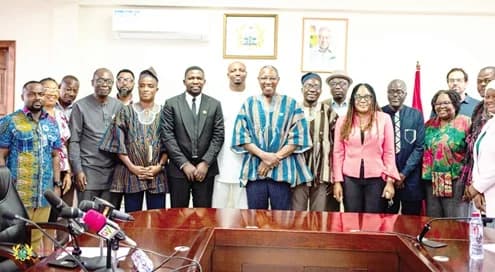
Ghana’s educational landscape experienced a surge of competitive and reformative activity in late June 2026, headlined by the dual success of St. Thomas Aquinas Senior High School. The institution emerged as a primary victor in two distinct arenas: the National Cadet Drill and Band Competition and the BTS Ghana Research Project visual arts contest. At the National Cadet Corps event held at the Ghana National Fire Service Training School, St. Thomas Aquinas and Bishop Herman College were crowned champions after demonstrating exceptional discipline and resilience despite heavy rainfall. Simultaneously, St. Thomas Aquinas clinched first place in the visual arts competition at the Ghana Library Authority, outperforming St. Mary’s and Accra High School in an event designed to highlight the challenges faced by female artists in the creative industry.
Beyond individual school achievements, the national agenda has shifted toward integrating technology and critical thinking into the curriculum through the launch of the 2026 Literacy Challenge. Targeting students aged 11 to 15, this year’s competition focuses on the impact of Artificial Intelligence (AI) in education. Participants are tasked with writing a 600-word letter to the Minister for Education, analyzing the pros and cons of AI and proposing strategies for its effective integration in both urban and rural schools. Supported by stakeholders such as Citi FM, Channel One TV, and the British Council, the initiative seeks to foster creativity and analytical skills among the youth as they navigate a digital-first future.
In tandem with student-centered competitions, the government and the National Schools Inspectorate Authority (NaSIA) have introduced the National Schools Awards (GALOP Edition) to drive institutional excellence. Launched in Accra with support from the World Bank, this initiative represents a shift in educational policy from prioritizing mere enrollment to focusing on tangible learning outcomes and management accountability. Deputy Minister of Education, Dr. Clement Abas Apaak, emphasized that the awards would evaluate schools based on measurable improvements in teaching quality and administrative efficiency, ensuring that the Ghana Accountability for Learning Outcomes Project (GALOP) achieves its core objectives.
These collective developments—ranging from military-style discipline and artistic expression to AI literacy and institutional oversight—signal a comprehensive approach to upgrading Ghana’s educational standards. While competitions provide a platform for students to showcase individual and collective talents, the new award schemes and literacy tasks aim to build a more robust, accountable, and technologically-aware school system. As research findings from the visual arts contest are disseminated and the literacy challenge progresses, stakeholders expect these initiatives to foster a more competitive and high-achieving environment for both students and educators across the country.
This story touches markets covered on Anansi Intelligence ↗.
Related topic
Ghana Fire Service Recruitment: Latest News Today →More from education
Continue exploring similar stories


