••
Ghana’s Industrial Landscape Expands with New Mining Diversification, Agricultural Processing Hubs, and International Manufacturing Partnerships
•2 min read•5 sources
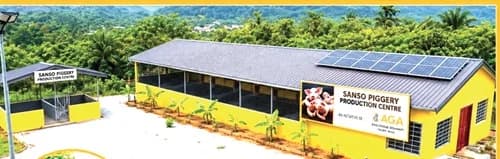
Ghana is witnessing a strategic shift in its economic landscape as major mining entities, government officials, and financial institutions push for industrial diversification and improved governance. AngloGold Ashanti’s Obuasi Mine recently inaugurated a GH¢1.49 million piggery production center in Sanso as part of its 10-Year Socio-Economic Development Plan. This modern facility, constructed by local contractor X-Mell Construction, aims to create sustainable livelihoods outside of mining, enhancing food security and regional job creation. Simultaneously, the Ghanaian government has announced plans to establish a large-scale palm processing factory in the Akyem Abuakwa Traditional Area. Chief of Staff Julius Debrah revealed the initiative during the 2026 Ohum Festival, emphasizing its role in boosting the palm oil industry and providing employment for local youth.
In the realm of international cooperation and manufacturing, Hon. Joana Gyan Cudjoe, Member of Parliament for Amenfi Central, has secured a strategic partnership with UNIPROMET, a prominent Serbian manufacturing firm. This collaboration is designed to leverage UNIPROMET’s engineering expertise to strengthen Ghana’s industrial sector, improve national infrastructure, and position the country as a primary hub for West African investment. This move aligns with broader efforts to transition Ghana from a raw material exporter to a manufacturing powerhouse, fostering economic opportunities for future generations.
However, the path to industrial growth faces significant hurdles in financing and labor relations. At the WAMPEX 2026 conference, Benjamin Nana Kwesi Mensah of Stanbic Bank highlighted that while the small-scale mining sector is vital for employment, it struggles to attract long-term investment due to poor deal structures and a lack of transparency. He urged operators to adopt rigorous Environmental, Social, and Governance (ESG) standards and legal compliance to build investor confidence. Meanwhile, labor tensions have surfaced at Prestea Sankofa Gold Limited, where workers have initiated a sit-down strike over unpaid June salaries and the Managing Director’s delay in signing a Memorandum of Understanding regarding end-of-service benefits.
These developments illustrate a complex economic period for Ghana, marked by ambitious industrial projects and the need for structural reforms. While new processing facilities and international partnerships offer a roadmap for growth, the sustainability of these gains will depend on resolving labor disputes and improving the transparency of financial frameworks within the extractive industries. As the government seeks land for new factories and mines diversify into agriculture, the focus remains on ensuring that industrial expansion translates into stable, long-term prosperity for all stakeholders.
This story touches markets covered on Anansi Intelligence ↗.
Live rates
Ghana gold price →More from business
Continue exploring similar stories


