••
UMaT Professor Christian Kwaku Amuzuvi Calls for Solar Tax Relief to Drive Ghana's Renewable Energy Transition
•2 min read•4 sources
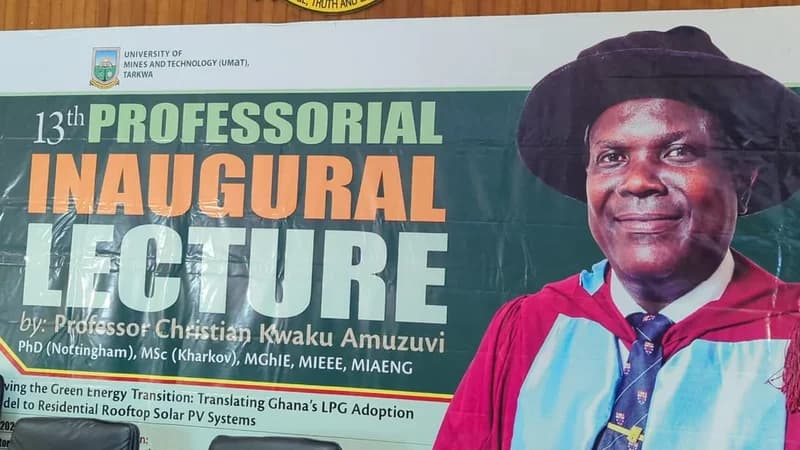
Professor Christian Kwaku Amuzuvi, the Head of the Department of Electrical and Electronic Engineering at the University of Mines and Technology (UMaT), has issued a compelling call for the Ghanaian government to implement bold policy reforms to accelerate the nation's transition to renewable energy. Speaking at his 13th Professorial Inaugural Lecture in October 2023, Professor Amuzuvi specifically highlighted the untapped potential of residential rooftop solar systems. He argued that moving away from traditional energy sources requires a strategic shift in national policy, primarily through the removal of taxes on solar equipment to make renewable technologies more accessible to the average Ghanaian household.\n\nDrawing parallels to Ghana’s successful adoption of Liquefied Petroleum Gas (LPG), the Professor suggested that a similar trajectory is possible for solar energy if the right incentives are in place. He challenged the prevailing notion that solar power remains prohibitively expensive, characterizing such concerns as outdated in the face of modern technological advancements and increased market competitiveness. According to Amuzuvi, the initial investment in a residential solar system can now be recovered within five to seven years, paving the way for a long-term "energy boom" that benefits both individual consumers and the national grid.\n\nBeyond direct financial savings, the academic emphasized that widespread solar adoption would significantly alleviate the current pressure on Ghana's natural resources and support national environmental sustainability goals. He underscored that the transition is not merely a technical challenge but a social one, requiring a concerted effort to educate citizens and provide them with the necessary access to technology. By removing fiscal barriers like import duties and taxes on solar components, the government could catalyze a surge in installations across homes and businesses, fostering a more resilient and self-sufficient energy sector.\n\nProfessor Amuzuvi’s proposal positions renewable energy as a cornerstone for Ghana's future economic development and ecological health. He maintains that with proactive government intervention and public education, the country can transform its energy landscape to be more sustainable and affordable. As Ghana continues to grapple with energy security and rising costs, the call from UMaT’s leading engineering expert provides a clear roadmap for policy makers: incentivize the private sector and domestic users to lead the charge toward a greener, solar-powered future.
This story touches markets covered on Anansi Intelligence ↗.
More from education
Continue exploring similar stories


