••
Ada Constituency Restores Emergency Ambulance Service Following Six-Month Engine Breakdown
•2 min read•4 sources
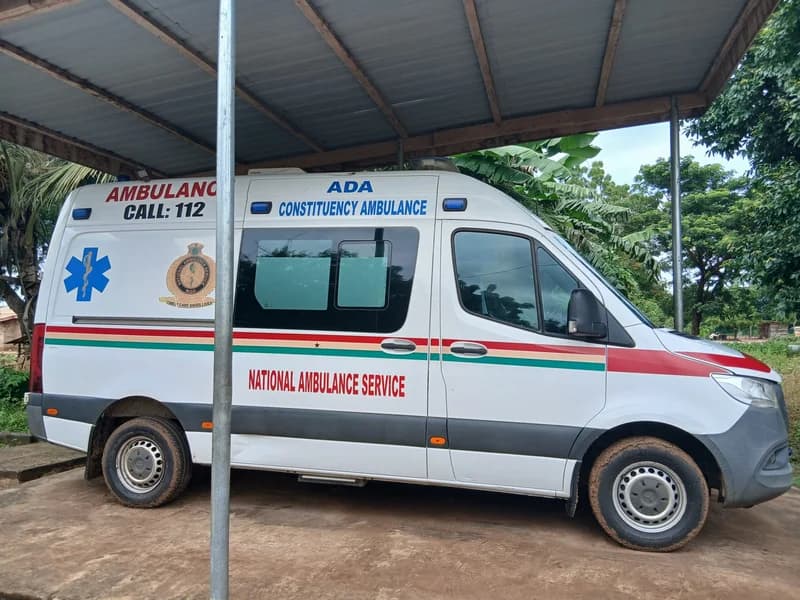
The National Ambulance Service (NAS) has officially resumed emergency operations in the Ada constituency, ending a six-month period during which residents were left without critical medical transport. The ambulance, which had been grounded since December 13, 2025, due to a severe engine breakdown, returned to active service on June 16, 2026. This restoration follows a collaborative effort between local political leadership and district authorities to address a mounting healthcare crisis in the region that had left the community vulnerable for half a year.
The repair of the vehicle was made possible through the combined financial support and intervention of the Member of Parliament for Ada, Madam Comfort Doyoe Cudjoe, and the Ada East District Assembly. Mr. Adams Awudu Jakpa, the Ada East District Director of the National Ambulance Service, confirmed that while the ambulance is now fully operational for emergency responses, the vehicle's air conditioning system remains non-functional. Despite this technical limitation, the NAS has cleared the vehicle to resume its life-saving duties to ensure that residents in the district have immediate access to hospital transfers during critical health episodes.
The prolonged absence of the ambulance had sparked significant tension within the community, culminating in demonstrations by local youth who advocated for immediate government action. Residents expressed grave concerns over the risks associated with transporting critically ill patients in private vehicles or commercial transport, which are often ill-equipped for medical emergencies. The return of the service has been met with widespread relief, particularly for those living in remote parts of the constituency where travel times to major health facilities are significant and professional pre-hospital care is a necessity.
While the resumption of service is seen as a vital step forward, it has also reignited calls for a more robust emergency infrastructure in the Ada East District. Community members and health advocates are now urging the government to provide additional ambulances to keep pace with the area's growing population. They argue that relying on a single vehicle—which remains prone to mechanical wear—is insufficient for the long-term health needs of the district, emphasizing that consistent and reliable emergency transport is a fundamental component of the right to health.
This story touches markets covered on Anansi Intelligence ↗.
More from health
Continue exploring similar stories


