••
Accra’s Waste Management Under Strain as NGO Volunteers Clear Nima Drains Amid McCarthy Hills Dumpsite Bottlenecks
•2 min read•3 sources
Accra’s struggle with waste management and flood prevention has taken center stage as community organizations and state actors grapple with the intensified seasonal rains. In a massive display of civic duty, the Let Love Lead NGO recently mobilized approximately 3,000 volunteers for its 4th Annual Sanitation Drive. The exercise, which serves as a solemn remembrance of the tragic June 3rd flood and fire disaster, saw participants clearing waste from the vital Nima-Mamobi drainage channel through to the Paloma Hotel. This large-scale effort was specifically designed to desilt primary drains and mitigate the perennial risk of flooding that plagues these densely populated areas during the wet season.
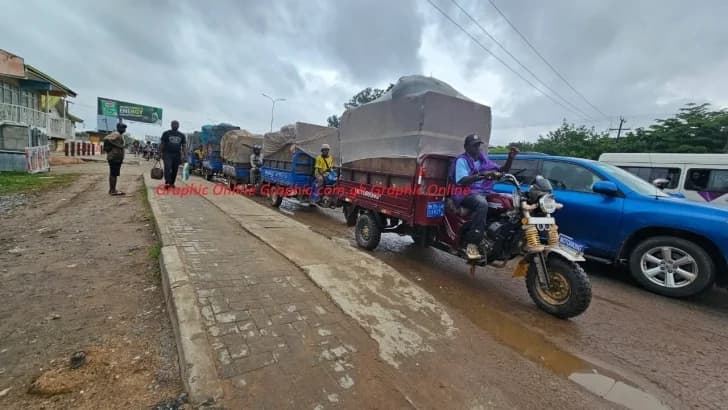
While community members are working to clear local drains, the broader waste disposal infrastructure in Accra West is facing severe logistical challenges. Scores of refuse-laden tricycles, popularly known as 'aboboyaa,' have caused significant traffic congestion along the N1 highway, stretching from Sakaman junction to Tetegu junction. The bottleneck is primarily attributed to the deteriorating state of the access roads leading to the McCarthy Hills dumpsite. Heavy rains have turned these routes into muddy, nearly impassable tracks, significantly slowing the discharge of waste and forcing long queues of tricycles onto the national highway, impacting both sanitation delivery and general commuting.
The situation has drawn urgent attention from national authorities and private waste management partners. On June 13, a high-level delegation from the Ministry of Local Government, Decentralisation and Rural Development, alongside representatives from Zoomlion Ghana Limited, visited the McCarthy Hills area to evaluate the congestion and explore immediate solutions. Dawood Akwesi Agyemang, the founder of Let Love Lead NGO, emphasized that while government intervention is crucial, the sustainability of Ghana’s environmental health depends on a shift in public attitude toward waste. He called for increased civic participation and more robust sanitation initiatives to ensure that the progress made during volunteer cleanups is not undone by systemic inefficiencies or illegal dumping.
