••
Abugbilla Bukari plants 480 Acacia trees at Bawku Senior High School
•2 min read•1 source
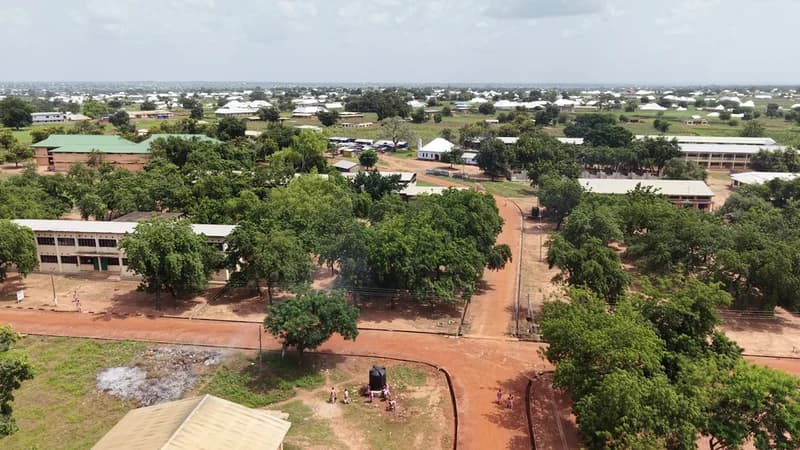
Reverend Abugbilla Bukari, the headmaster of Bawku Senior High School (SHS), has led his students in a significant afforestation drive, planting 480 Acacia trees across the school's campus. This initiative is designed to mitigate the effects of climate change, enhance the school’s microclimate, and create shaded recreational areas for the student body. The project draws on a deep institutional history of environmental stewardship, continuing a legacy of tree planting that has defined the school for more than three decades.
The recent planting exercise carries profound personal significance for Reverend Bukari, who was himself a student at Bawku SHS during the early 1990s. He recalls the beginnings of the school’s formal afforestation commitment in 1991, which was initiated by the late headmaster B.J.L. Kumasi. Returning to the institution as its current leader, Bukari is now overseeing the expansion of the very environment he helped cultivate as a teenager. The 480 trees planted in 2024 have already demonstrated a high survival rate, reflecting the school's effective maintenance strategies and the active participation of the students.
Beyond campus aesthetics, the initiative aligns with the national Green Ghana Project, an ambitious government effort to restore the country's lost forest cover and combat desertification. By involving students directly in the planting and care of the Acacia trees, the school aims to foster a sense of responsibility and environmental consciousness among the youth. The headmaster emphasized that these efforts are crucial for improving local weather conditions in the Bawku area, which frequently faces harsh environmental stressors and rising temperatures.
To ensure the long-term success of the plantation, Reverend Bukari has called for improved infrastructure to protect the school's green spaces. A primary concern remains the encroachment of wandering livestock, which can easily destroy young saplings. The headmaster is advocating for the construction of a robust perimeter wall around the campus to shield the newly planted trees and existing groves from grazing animals. Such protection, he argues, is essential to sustaining the school's role as a local leader in environmental sustainability and ensuring these trees reach full maturity for the benefit of future generations.
