••
Ghana’s Future Educators Urged to Prioritize Human Empathy Over AI in the Classroom
•2 min read•5 sources
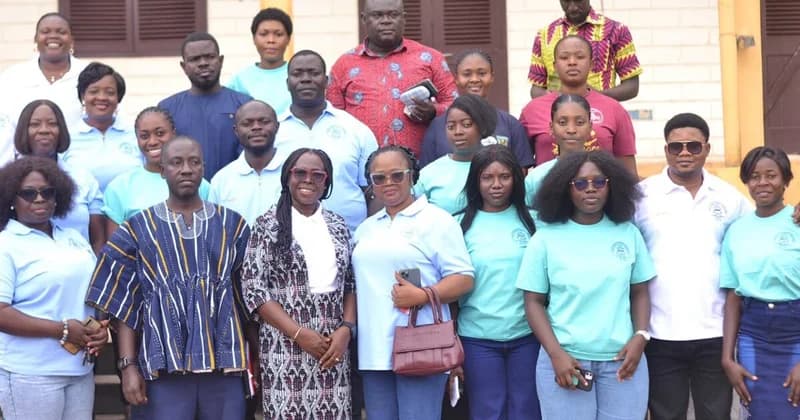
Bosco Aboagye, a lecturer at St Monica’s College of Education, has emphasized that while Artificial Intelligence (AI) is rapidly transforming the educational landscape, it cannot replace the essential human qualities required in teaching. Speaking at the launch of the Social Sciences Students Association (SOSSA) at Agogo Presbyterian Women’s College of Education (APWCE), Aboagye cautioned trainee teachers that the "human touch"—comprising empathy, moral judgment, and ethical reasoning—remains the foundation of effective pedagogy. He argued that while AI serves as a powerful digital tool to enhance learning and manage workloads, it lacks the wisdom necessary to navigate complex human emotions and societal nuances.
The establishment of SOSSA is intended to address these very challenges by preparing student teachers for the multifaceted realities of their future careers. Aboagye urged the trainees to look beyond their academic qualifications and develop vital soft skills, such as effective communication, problem-solving, and independent research. By understanding the dynamic nature of societal issues like poverty and corruption, future educators can better serve their communities. SOSSA’s mission, supported by its President Mary Brobbey and Vice President Grace Owusu, is to foster stronger ties between educators and the communities they serve while instilling positive values in the student body.
Supporting the initiative, the Principal of Agogo Presbyterian Women’s College of Education, Professor Lydia Aframea Dankyi, stressed the importance of unity and innovation. She noted that associations like SOSSA are vital for producing competent teachers who can adapt to a changing world without losing their moral compass. This sentiment aligns with broader academic shifts where universities are being urged to redesign assessments. As AI becomes more prevalent in university life for drafting essays and summarizing readings, experts suggest that the focus must move away from mere information recall toward prioritizing critical thinking and original intellectual contributions from students.
In the evolving educational climate, the consensus among Ghanaian educators is that technology should be leveraged as a learning aid rather than a substitute for intellectual engagement. The goal is to equip the next generation of teachers with the ability to navigate a digital-first world while maintaining the deep interpersonal connections that define the teaching profession. By integrating AI responsibly, educators can focus on mentoring students through the complex social and moral landscapes that technology alone cannot navigate.
This story touches markets covered on Anansi Intelligence ↗.
More from education
Continue exploring similar stories


