••
Ghanaian Artist Sharon Dede Padi Achieves Guinness World Record for World's Largest Leaf Print Painting
•2 min read•2 sources
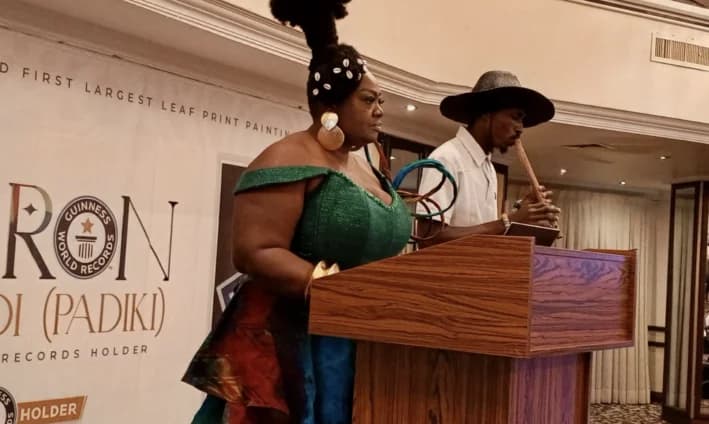
Ghanaian visual artist Sharon Dede Padi has made history by securing a Guinness World Record for the "Largest Leaf Print Painting." The record-breaking masterpiece, measuring an impressive 54.33 square metres, was officially unveiled at the National Theatre of Ghana. This achievement marks a significant milestone for Ghana's creative industry, positioning the nation prominently on the global artistic stage and highlighting the unique intersection of traditional techniques with modern environmental advocacy.
The artwork is a vibrant tapestry of Ghana's history, culture, and national identity. It was meticulously crafted using individual leaf prints from a wide variety of indigenous plants, a technique that requires both precision and a deep understanding of natural textures. By utilizing botanical elements as her primary medium, Padi sought to create a visual dialogue between the Ghanaian people and their natural environment. The sheer scale of the painting—over 54 square metres—underscores the ambition of the project and the dedication required to achieve such a feat.
Beyond its record-breaking dimensions, the project carries a profound message of environmental conservation. Sharon Dede Padi aimed to use her platform to celebrate Ghana’s rich natural resources while simultaneously drawing attention to the urgent need for ecological preservation. The use of leaves as "stamps" serves as a metaphor for the indelible mark that nature leaves on human culture. During the unveiling ceremony, members of the local arts community praised the work not just for its physical size, but for its conceptual depth and its call to protect the environment for future generations.
This historic certification by Guinness World Records solidifies Padi’s status as a pioneer in the leaf print medium. It represents more than just a personal triumph; it is a victory for the Ghanaian creative sector, demonstrating the potential for local artists to compete at the highest international levels. As the piece begins its life as a cultural landmark, it is expected to inspire a new generation of Ghanaian artists to explore unconventional materials and themes that resonate with both local heritage and global challenges.
This story touches markets covered on Anansi Intelligence ↗.
More from entertainment
Continue exploring similar stories


