••
Ghana and Regional Partners Navigate Global Trade Tensions While Strengthening Local Markets and International Ties
•3 min read•18 sources
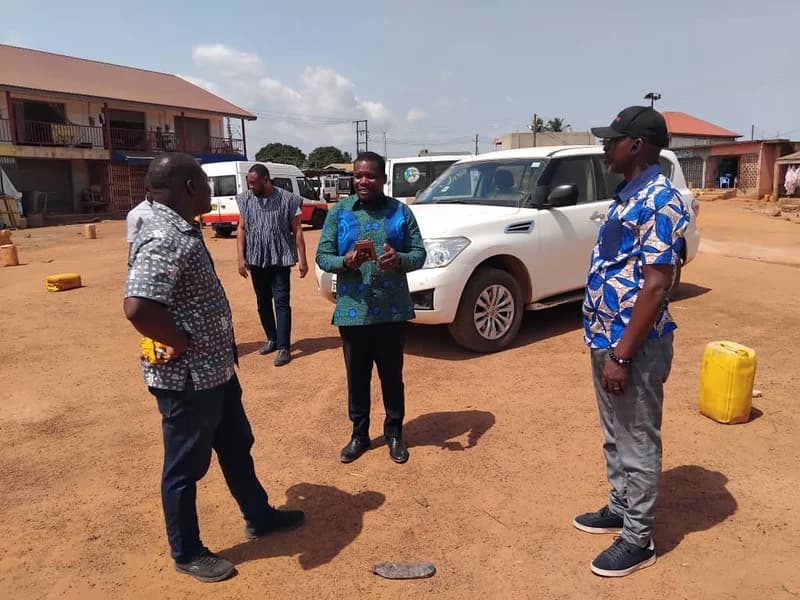
The global and local economic landscape is undergoing significant shifts as Ghana and its neighbors intensify efforts to bolster trade infrastructure while navigating a fragmenting international order. Locally, the Ketu North Municipal Assembly is advancing its '24-Hour Economy Market' project, a strategic initiative aimed at transforming the municipality into a round-the-clock commercial hub. During recent site assessments led by Municipal Chief Executive Reverend Martin Amenaki and consultants from PPMC International, officials evaluated three potential locations. While initial community feedback favored redeveloping the existing central market, consultants noted that the current 1.92-acre site and a secondary 1.98-acre plot at Dzeshime are currently insufficient to house the full scope of planned facilities. The Assembly is now refining layout plans to ensure the project—which requires a minimum of two to three acres—can serve as a modern model for local economic development.
On the international stage, Ghana is deepening its 'modern growth partnerships' with traditional Western allies. The United Kingdom and Ghana recently marked five years of their Trade Partnership Agreement (TPA), announcing two major financial initiatives: Ci-Gaba, a first-of-its-kind pension-backed fund designed to support Ghanaian SMEs, and NeoFinGo, a digital solution aimed at modernizing cross-border trade finance. Simultaneously, the United States Embassy in Accra, led by Chargé d’Affaires Rolf Olson, has reaffirmed its commitment to strengthening commercial ties, highlighting shared entrepreneurial values during recent trade events. These partnerships are viewed as vital buffers for Ghanaian businesses as they seek to navigate volatile global markets and improve local industrial competitiveness.
Across the wider continent, the informal sector is being reimagined as a 'sleeping giant' for regional growth. At a recent Southern African Development Community (SADC) meeting in Botswana, leaders urged member states to transition informal enterprises into the mainstream economy through social protection, improved access to finance, and targeted skills development. This regional push for industrialization is mirrored in the energy sector, as evidenced by the Solar and Storage Live Africa 2026 expo, which drew over 650 exhibitors from countries including Ghana, China, and South Africa. The event underscored a growing continental consensus on the need for local and international collaborations to secure sustainable energy solutions.
However, these local and regional advancements face a backdrop of global uncertainty as the World Trade Organization (WTO) meets in Cameroon. Director-General Ngozi Okonjo-Iweala warned of a critical crossroads for the multilateral trading system, which is currently strained by Middle Eastern conflicts and a rise in protectionist policies. While China continues to defend the 'most-favoured nation' principle that governs the majority of global trade, the United States has advocated for a shift toward smaller, more flexible group agreements. For Ghana and its African peers, the outcome of these global reforms will be decisive in determining whether they can maintain the trade stability necessary to support their ambitious local and regional economic agendas.
This story touches markets covered on Anansi Intelligence ↗.
More from business
Continue exploring similar stories

