••
Ghana’s Economic Landscape: Industrial Growth, SME Empowerment, and Agricultural Shifts Drive Development
•3 min read•14 sources
Ghana’s business environment is experiencing a significant shift as the nation balances industrial expansion with a concerted effort to empower small and medium enterprises (SMEs) and address sector-specific challenges. A major milestone in industrialization was reached through a landmark Memorandum of Understanding between the Ministry of Food and Agriculture and the Sentuo Group Limited. This partnership aims to establish agro-processing facilities and a national fertilizer manufacturing plant, signaling a move from raw commodity exports toward a robust agro-industrial economy. This progress is mirrored in the maritime sector, where the Tema Shipyard and Drydock Limited has reported a remarkable 55% revenue growth under the leadership of CEO Alhaji Osman Sulemana, transforming the facility into a modern maritime hub. Additionally, the real estate sector received a boost with the launch of the Prime Accra project by KASA Properties, which is expected to reshape the capital's skyline and create numerous urban development opportunities.
While large-scale projects drive national infrastructure, financial institutions and educational bodies are focusing on the backbone of the economy: local enterprises and talent. Republic Bank (Ghana) PLC recently reaffirmed its commitment to scaling up local businesses following the Kwahu Business Forum, emphasizing the need for a supportive ecosystem for maturing firms. Similarly, Stanbic Bank Ghana, in collaboration with PrymeAds, has launched a digital skills training program through its Business Incubator to equip SMEs with essential marketing and data analytics tools. These efforts are complemented by academic initiatives, such as the African University of Communication and Business (AUCB) providing practical business training to students and Fidelity Bank’s donation of 50 laptops to the University of Ghana, all aimed at bridging the digital and skills gap for the next generation of entrepreneurs.
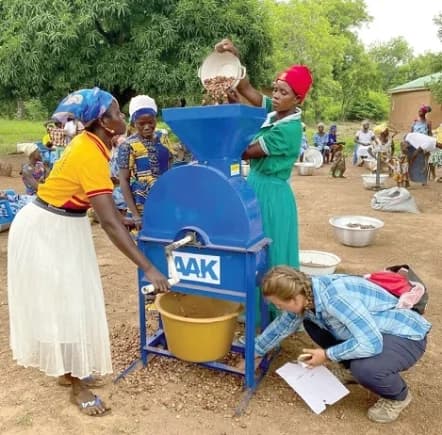
In the agricultural and creative sectors, the narrative is one of both immense potential and urgent calls for intervention. Experts like Kwaku Boateng of the Coconut Federation of Ghana are advocating for increased investment in coconut production, citing its capacity to stabilize the economy and provide alternative livelihoods. This is echoed by the success of the Kolo Nafaso initiative, which has empowered over 250,000 women in the shea kernel sector through fair market access and pre-financing. However, a stark contrast is visible in the Shai Osudoku District, where rice farmers in Asutsuare are facing a financial crisis due to unsold produce and competition from imported rice. Farmers are calling for urgent government action on fair pricing and infrastructure to prevent further post-harvest losses and financial distress.
Ultimately, the sustainability of Ghana’s economic growth depends on a combination of strategic leadership and inclusive support systems. Leadership experts emphasize that clear accountability and reporting discipline are essential for CEOs to drive organizational performance. Furthermore, initiatives like the Ninani Group’s D.A. Twum Jnr. Fellowship are working to enhance talent quality in the creative and marketing sectors through structured mentorship. As Ghana Gas clears its name of procurement irregularity allegations and focuses on operational risk management, the broader business community remains focused on a dual-track strategy: leveraging large-scale industrial partnerships while ensuring that local SMEs and vulnerable agricultural sectors are provided the tools and market protections necessary to thrive in an increasingly competitive global environment.
This story touches markets covered on Anansi Intelligence ↗.
More from business
Continue exploring similar stories

