Ghana News AI
HomeBriefsAsk GhanaTopicsTools
•
•

Stay Informed

Get AI-curated news briefs from Ghana delivered to your inbox every morning. Free forever, no spam.

Explore

  • Home
  • Briefs
  • About

Categories

  • Politics
  • Business
  • Sports
  • Entertainment
  • Africa

Features

  • Analysis
  • Cedi Rates
  • Dollar to Cedi
  • Ghana Gold Price
  • BoG Policy Rate

Topics

  • Armed Forces Recruitment
  • WAEC Results & News
  • Nana Ama McBrown
  • NDC News
  • All Topics

Legal

  • Privacy Policy
  • Terms of Service
Ghana News AI© 2026. All rights reserved.
Made withfor Ghana
africa

Law Enforcement Intensifies Across Africa: Human Trafficking Rescues in Ghana and Wildlife Smuggling Conviction in Kenya

15th April•3 min read•13 sources
Law Enforcement Intensifies Across Africa: Human Trafficking Rescues in Ghana and Wildlife Smuggling Conviction in Kenya
  1. Home
  2. /Africa
  3. /Law Enforcement Intensifies Across Africa: Human Trafficking Rescues in Ghana and Wildlife Smuggling Conviction in Kenya

Law enforcement agencies across Africa have ramped up operations against organized crime, highlighted by the rescue of hundreds of victims in Ghana and a landmark wildlife smuggling conviction in Kenya. In Accra, the Ghana Immigration Service (GIS) successfully intercepted an exploitative street-begging network, rescuing 305 West African nationals, including 113 children. Simultaneously, a Kenyan court delivered a strong deterrent against ecological crimes by sentencing a foreign national for attempting to smuggle rare queen ants, signaling a continent-wide push to uphold the rule of law and protect vulnerable populations and ecosystems. This surge in enforcement activity comes as governments face increasing pressure to address cross-border trafficking and environmental degradation.

The GIS operation in Ghana targeted high-traffic areas such as Madina, Kaneshie, and Nima, uncovering a sophisticated network that exploited foreign nationals for forced begging. According to officials, the rescued individuals are currently undergoing profiling and will receive necessary support as investigations into the trafficking rings continue. In a separate but equally significant development in Accra, the Ghana Police Service dismantled a narcotics syndicate in Dzorwulu. Three suspects were apprehended with quantities of suspected cocaine and over GH¢800,000 in cash. Notably, one suspect allegedly attempted to bribe officers with GH¢420,000, underscoring the high-stakes and corrosive nature of the region's illicit drug trade.

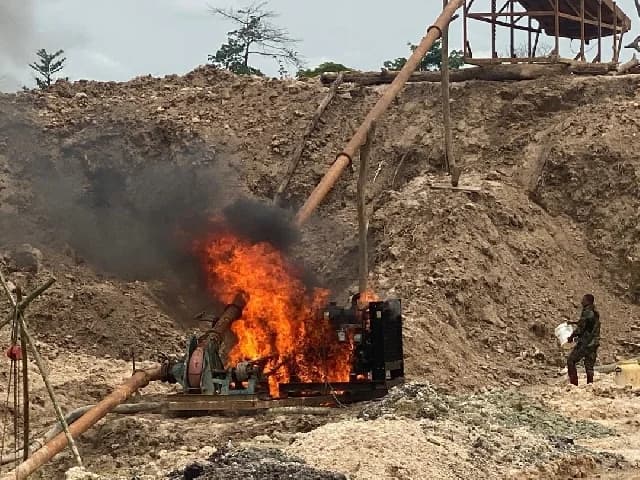
However, the crackdown on illegal activities has also led to volatile confrontations in rural areas. Tensions remain high in Ghana's Bono Region following the death of 23-year-old Kwabena Agyei, a suspected illegal miner whose body was found near the chief’s palace in Akontanim. The incident, believed to have occurred during a confrontation with an anti-galamsey taskforce, sparked massive community unrest, with hundreds of residents blocking the Dormaa Ahenkro–Berekum highway. While police work to restore order and investigate the circumstances of Agyei’s death, specialized units have continued the fight against environmental destruction. The NAiMOS task force recently executed a successful raid in the Berekum West District, destroying five excavators used for illegal mining activities that had severely polluted local water bodies.

Further regional security efforts saw the Ghana Police Service neutralize Amadu Mammaa, a notorious armed robbery and murder suspect, during a shootout in the Bono East Region. Mammaa was linked to several high-profile crimes, including the murder of Hawa Yakubu. Meanwhile, investigators have launched a cross-border manhunt for Wisdom Tetteh, a suspect in the disappearance of a 27-year-old man who went missing during a car sale transaction and is believed to have fled to Togo. In East Africa, the sentencing of Zhang Kequn in Nairobi to a year in prison for smuggling 2,000 queen ants further illustrates the diversity of challenges facing African security services. Together, these actions reflect an increasingly proactive, multi-front stance by authorities to tackle both traditional violent crime and emerging trans-border security threats.

Our Take

From the Team

Coming Soon

Our team will add key insights, trends, and actionable takeaways to help you stay informed faster.

This story touches markets covered on Anansi Intelligence ↗.

Related topic

Ghana Immigration Service Recruitment: Latest News →

More from africa

Continue exploring similar stories

Black Queens Prepare for High-Stakes Mali Clash in WAFCON as Nigerian Influencer Peller Reports Fake Wedding Cash
africa|Yesterday

Black Queens Prepare for High-Stakes Mali Clash in WAFCON as Nigerian Influencer Peller Reports Fake Wedding Cash

Ghana’s national women’s football team, the Black Queens, is preparing for a high-stakes encounter against Mali in their final Group D match of the 2026 Women’s Africa Cup of Nations (WAFCON). Head coach Kim Lars Bjorgekren is expected to field his most potent starting XI to secure a vital place in the quarter-finals. This pivotal sporting moment for Ghana comes alongside a viral incident in neighboring Nigeria, where popular content creator Peller has raised alarms after receiving counterfeit dollar bills during his recent wedding celebrations. The stakes for the Black Queens could not be higher. Currently sitting in second place in Group D with three points, Ghana is tied with Mali but holds a narrow advantage. While Cameroon has already secured a spot in the next round with six points, the upcoming match between Ghana and Mali will serve as a de facto playoff for advancement. Coach Bjorgekren’s strategy emphasizes stability and experience as the team looks to solidify their standing against a resilient Malian side that also requires a win to progress. At the bottom of the group, Cape Verde remains with zero points. Beyond the football pitch, the West African digital community is abuzz with revelations made by Nigerian influencer Peller. During a recent livestream, the creator disclosed a frustrating turn of events following his high-profile wedding. Peller revealed that upon attempting to deposit the cash "sprayed" on him during the ceremony—a traditional celebratory practice in the region—he discovered that a significant portion of the dollar bills were counterfeit. The discovery was made after the entertainer took the currency to the bank for processing, where officials identified the fake notes. Peller’s public lamentation highlights a growing concern regarding the authenticity of currency used during large social gatherings where "spraying" money is common. The incident has sparked a wider conversation online about the risks associated with such displays of wealth and the potential legal implications for those distributing fake currency. It serves as a reminder of the vulnerabilities public figures face when hosting large-scale events that attract both genuine well-wishers and opportunistic bad actors. As the Black Queens prepare to represent Ghana on the continental stage, these two stories reflect the diverse and often contrasting narratives currently shaping the West African landscape. For the Queens, a victory against Mali would bring national pride and move the team one step closer to the WAFCON title. Meanwhile, Peller’s experience serves as a cautionary tale for public figures navigating the complexities of traditional celebrations and modern financial security in the digital age.

Thanksgiving service for Apostle Kwadwo Safo set for August 8
africa|Yesterday

President Mahama Strengthens Ties in Jamaica as Ghanaian Religious Leadership Expands Missions and Honours Legacies

President John Dramani Mahama has undertaken a landmark State Visit to Jamaica, reinforcing the deep-seated historical and cultural bonds between Ghana and the Caribbean nation. During his visit, President Mahama delivered a historic address to the Jamaican Parliament and paid homage to Jamaican National Hero Marcus Garvey. Emphasizing a shared ancestry, the President toured Seville Heritage Park and reaffirmed Ghana’s commitment to Pan-Africanism and cultural reconnection. Central to his diplomatic agenda was a reaffirmed support for reparations regarding historical injustices, signaling a proactive stance by the Ghanaian government in fostering deeper cooperation within the African Diaspora. In a parallel effort to strengthen West African regional ties through spiritual diplomacy, Rev. Stephen Wengam, the General Superintendent of the Assemblies of God, Ghana, is leading a high-level delegation to The Gambia. This week-long mission is historically significant as it represents the first time the entire Executive Presbytery has traveled to the Gambian mission field, which was established approximately 30 years ago under the leadership of the late Rev. Simon Asore. The visit aims to bolster local mission efforts through the dedication of a new temple and participation in a National Pastors and Leaders Conference, highlighting Ghana's enduring role as a hub for continental religious outreach. Locally, the Kristo Asafo Mission and the Kantanka family are preparing for a major thanksgiving service on Saturday, August 8, at the Prempeh Assembly Hall in Kumasi to celebrate the extraordinary life of Apostle Kwadwo Safo. The late Apostle, who passed away at the age of 113, is being remembered as a visionary leader whose influence spanned spiritual, technological, and socio-economic sectors. Expected to draw traditional authorities and industrial leaders, the service will honor Safo’s legacy as a philanthropist and innovator who made significant contributions to education, agriculture, and the Kantanka Group’s indigenous technological advancements. These diverse activities—ranging from high-level statecraft in the Caribbean to missionary expansion in West Africa and the celebration of homegrown industrial genius—underscore the multifaceted nature of Ghana's contemporary influence. Whether through President Mahama's diplomatic overtures or the cross-border religious leadership of Rev. Wengam, Ghana continues to assert its identity as a leader in Pan-African thought and action. The legacy of figures like Apostle Kwadwo Safo serves as a foundational reminder of the country's potential for self-reliance and innovation as it engages with both its neighbors and the global community.

Schools have not been spared the devastation.  By Tony KARUMBA (AFP)
africa|Yesterday

Ghana Advances River Restoration and Maritime Security While Kenya Faces Climate-Driven Wildlife Risks

Ghana’s Ministry of Lands and Natural Resources has reported marginal improvements in the quality of major water bodies previously devastated by illegal mining, even as the continent faces broader environmental and security challenges. From the restoration of the Pra, Ankobra, and Birim rivers to the enhancement of maritime security in the Gulf of Guinea, West African authorities are intensifying efforts to protect natural resources. Meanwhile, in East Africa, the devastating impact of climate change is becoming increasingly visible as rising lake levels in Kenya displace thousands and drive dangerous wildlife into residential areas. In Ghana, Ministry spokesperson Paa Kwesi Shandorf highlighted that while water quality in key rivers is not yet fully restored, nine months of consistent anti-illegal mining measures are yielding positive trends. The Ministry is now shifting focus toward the costly task of land reclamation, seeking further collaboration with private entities such as Newmont Corporation and Zijin Mining Group. These initiatives come amid sustained public pressure on the government to mitigate the environmental degradation caused by illegal mining and ensure the long-term sustainability of Ghana's water and land resources. Concurrent with environmental efforts, the Ghana Navy has significantly bolstered its operational readiness through a specialized training partnership with the European Union’s SWAIMS Programme. Conducted by the Portuguese Navy at the Naval Training Command (NAVTRAC), the program focused on enhancing boat-handling and maritime response capabilities. Commodore Antonio Neves Rodrigues and Commodore James Adongo Agambire emphasized that these capacity-building measures are critical for addressing evolving security threats in the Gulf of Guinea, ensuring that West African maritime borders remain secure for trade and regional stability. Contrasting the restoration efforts in West Africa, Kenya is grappling with an ecological crisis as Rift Valley lakes like Lake Baringo have expanded by 70% since 2010. These unprecedented water levels, fueled by climate-induced rainfall, have submerged schools and resorts, causing tourism revenues to plummet from $1 million to $200,000 annually. More critically, the shrinking habitats have pushed crocodiles and hippos into human settlements, leading to a rise in attacks and jeopardizing local fisheries and drinking water supplies. These diverse developments across the continent underscore the complex interplay between environmental management, security, and climate resilience. While Ghana’s progress in river restoration and maritime training demonstrates the effectiveness of targeted governmental and international interventions, Kenya’s situation serves as a stark reminder of the volatile nature of climate change. Moving forward, the success of these African nations will depend on sustained investment in infrastructure, stronger regional security frameworks, and a proactive approach to ecological preservation in the face of global environmental shifts.

Sexual harassment rampant in GH creative industry – New study finds
africa|Yesterday

Michael Adeboboye and UCC Researchers Advocate for Narrative Ownership and Gender Safety in Africa

Michael Adeboboye, Chairman of the Congress of African Journalists (CAJ), has emphasized the urgent need for Africa to reclaim its narrative by defending press freedom and enhancing the capacity of journalists across the continent. Founded in 2020, the CAJ is actively working to reshape the global perception of Africa through its flagship publication, CAJ International Magazine, and engagements with international media protocols. Adeboboye highlights that despite significant challenges—including funding shortages and safety threats—the organization remains committed to fostering cross-border collaboration and promoting diverse languages in storytelling to ensure a thriving independent media landscape. This push for narrative ownership and professional integrity is echoed in the Ghanaian creative sector, where a landmark study titled "Behind the Scenes (BtS): Young Women and Gender-Based Inequities in Africa’s Creative Sector" has exposed rampant sexual harassment and gender discrimination. Conducted by the University of Cape Coast (UCC) with support from the International Centre for Research on Women, the research documents the struggles of young female creatives who face systemic barriers despite their determination to pursue careers in the arts. Stakeholders are now being urged to move beyond merely identifying these problems and instead establish concrete, supportive conditions that ensure safer spaces and equitable treatment for women in the industry. These professional and safety concerns are unfolding alongside a broader cultural shift in Ghana regarding traditional social structures and personal autonomy. While marriage has historically been viewed as an essential life milestone for community bonding and child-rearing, changing economic conditions and personal choices are making singlehood an increasingly accepted and even fashionable lifestyle. This transition allows for greater personal growth and financial independence, yet it also presents new emotional challenges, such as loneliness, highlighting a society that is increasingly valuing individual agency over rigid tradition. Collectively, these developments in journalism, the creative arts, and social life signal a transformative period for Ghanaian and African identity. From Adeboboye’s advocacy for narrative independence to the UCC’s call for gender safety and the evolving norms of singlehood, the common thread is a region striving to define its own future. As Africa continues to navigate these internal and external pressures, the focus remains on building ethical, safe, and inclusive environments that allow individuals to achieve their full potential in both their professional and personal lives.

All
africa
business
education
entertainment
health
news
politics
sports
technology